
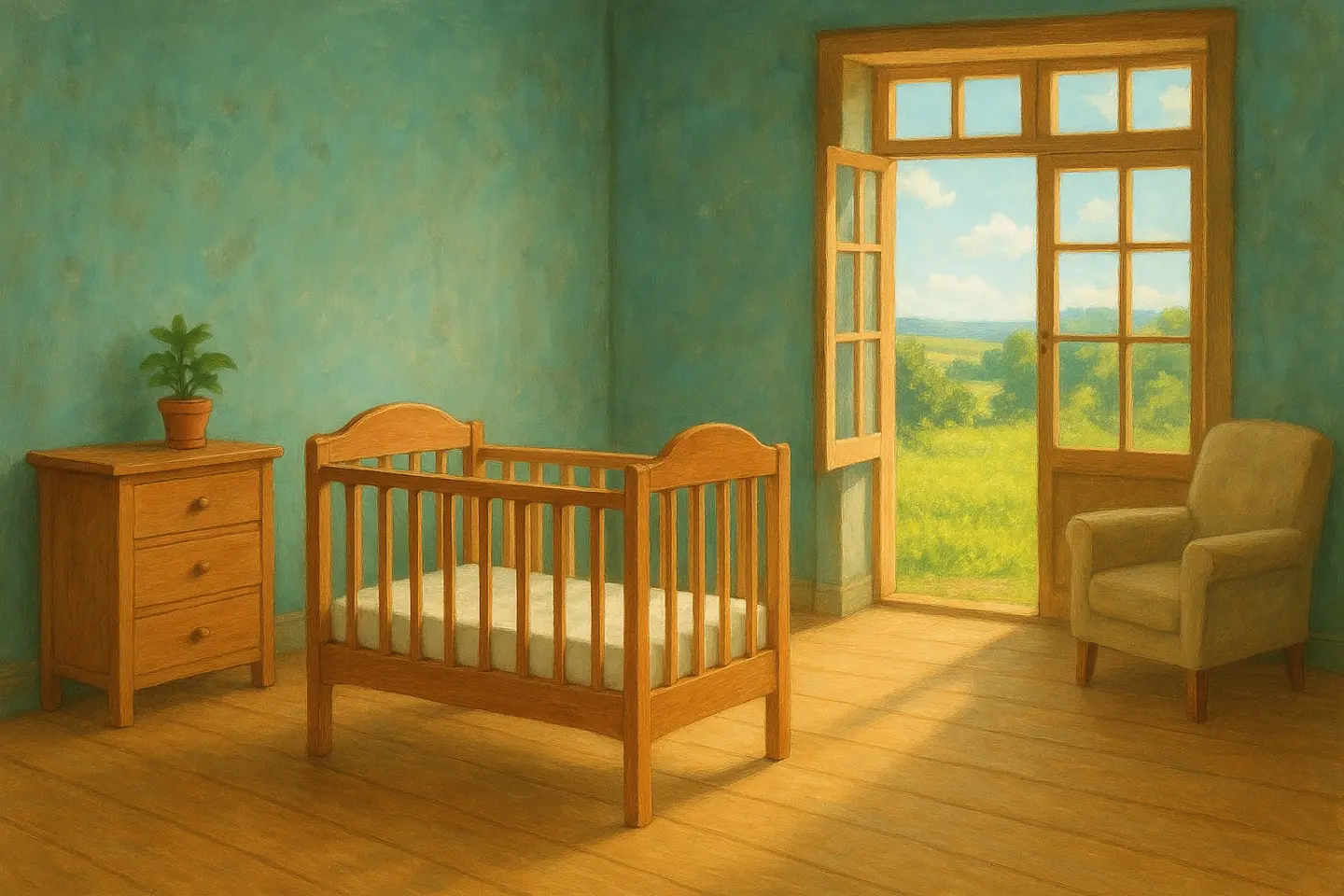
Babies are more sensitive to environmental exposure than adults, so here are four high-leverage steps you can take to reduce environmental toxin exposure in their nursery.
1. Install a HEPA air purifier
Babies breathe faster than adults and generally breathe more air per unit of body mass, making indoor air quality especially important. Common pollutants include smoke, dust, and particulate matter, which can cause a range of health effects.
What we recommend:
- Install a HEPA air purifier to reduce these exposures and improve overall air quality. To make things simple, we created a free tool to help you pick the right air purifiers for your home. 100% free, no signup required, no affiliate links, no partnerships or bias. Just data. You put in your room sizes and preferences around noise and design, and it recommends a best-value pick and an upgrade pick for each room. It uses a metric we developed called “Quiet CADR,” the clean air delivery rate at a volume that won’t disturb sleep.
- Also, ensure you run the air purifier continuously at the highest speed comfortable for noise, not on auto mode. Auto mode often waits for particle levels to rise before kicking on and may not detect particles of all sizes.
2. Replace evening LEDs with incandescent/halogen bulbs, or specialty LEDs designed to minimize blue light
Lighting directly affects sleep quality in both adults and children. The two factors that matter most are blue light and flicker.
- Blue-rich light in the evening suppresses the body’s natural production of melatonin (i.e. the “sleep hormone”). Most LEDs, even those that look “warm,” can still emit a meaningful blue light peak. Evening exposure to this blue light can suppress melatonin and disrupt circadian rhythm.
- Flicker is the rapid fluctuation in light output common in LEDs. Even when invisible to the naked eye, it can contribute to headaches, eye strain, and fatigue.
What we recommend:
- We personally love amber-tinted incandescent bulbs, but you can also opt for clear ones. These bulbs have a smooth light spectrum without a blue light spike. They also have minimal flicker because their hot filaments retain heat and continue to glow between cycles. There are also some good LED options. Healthy Home Shop makes great bulbs that can transition between daytime and evening spectra.
- In the evening, avoid overhead lighting. The photoreceptors in our eyes that regulate circadian rhythm are more sensitive to light from above. Use lamps below eye level instead.
3. Reduce sources of VOCs (Volatile Organic Compounds)
Many everyday household items, such as cleaning products, furniture, and air fresheners, release harmful chemicals called VOCs into the air. VOCs are linked to serious health concerns, including cancer, headaches, and respiratory issues.
- Switch to low-VOC cleaning and laundry products. We personally use and recommend Branch Basics.
- Choose a clean mattress free from formaldehyde, flame retardants, and stain-resistant chemicals. If a new mattress isn’t an option right now, start with a natural latex mattress topper.
- Pick a solid wood bed frame instead of particleboard or fiberboard (which can off-gas formaldehyde).
- Select natural fiber bedding (cotton, linen, hemp, bamboo: look for Lyocell with OEKO-TEX certification; or silk: make sure it’s 100%) and avoid anything labeled “wrinkle-free.”
- When shopping for furniture, look for Greenguard Gold (which certifies low chemical/VOC emissions). For any upholstered pieces and fabrics, also look for OEKO-TEX Standard 100.
4. Take simple steps to reduce electromagnetic field exposure
While the most severe EMF issues require specialized on-site testing and remediation, there are some steps you can take right away to reduce exposure.
- Move the crib a few inches away from the walls. Even this small distance can reduce exposure from electrical wiring.
- Unplug bedroom electronics at night (including lamps and chargers).
- Check what’s on the other side of the bedroom walls. Avoid placing the crib against a wall that has a refrigerator, electrical breaker panel, or other appliances on the other side.
- Consider a wired baby monitor. Baby monitors, in particular, are often a significant source of EMFs and are more dangerous because they’re placed right next to sleeping infants (here’s a small study that found that sleep quality dropped significantly when exposed to RF radiation from baby monitors). We recommend using an Ethernet-enabled hard-wired camera instead.
- If running Ethernet is not practical, consider using a baby monitor shield and position the monitor as far from the crib as possible.
A study explored the impact of environmental exposure on infant sleep
Researchers at the University of Picardy reviewed the evidence on how a baby’s environment may affect sleep. They looked at factors such as air pollution, water quality, and chemical pollutants.
Some studies found links between environmental pollutants and sleep disturbances in infants and children. There is also early evidence that chemicals found in water, plastics, and household products have an effect.
What this means
More studies are needed, as many findings rely on parent-reported sleep data. However, the findings do suggest that environmental factors can play a role in sleep and underscore the importance of a healthy home environment during early childhood.
Read the full paper here.