
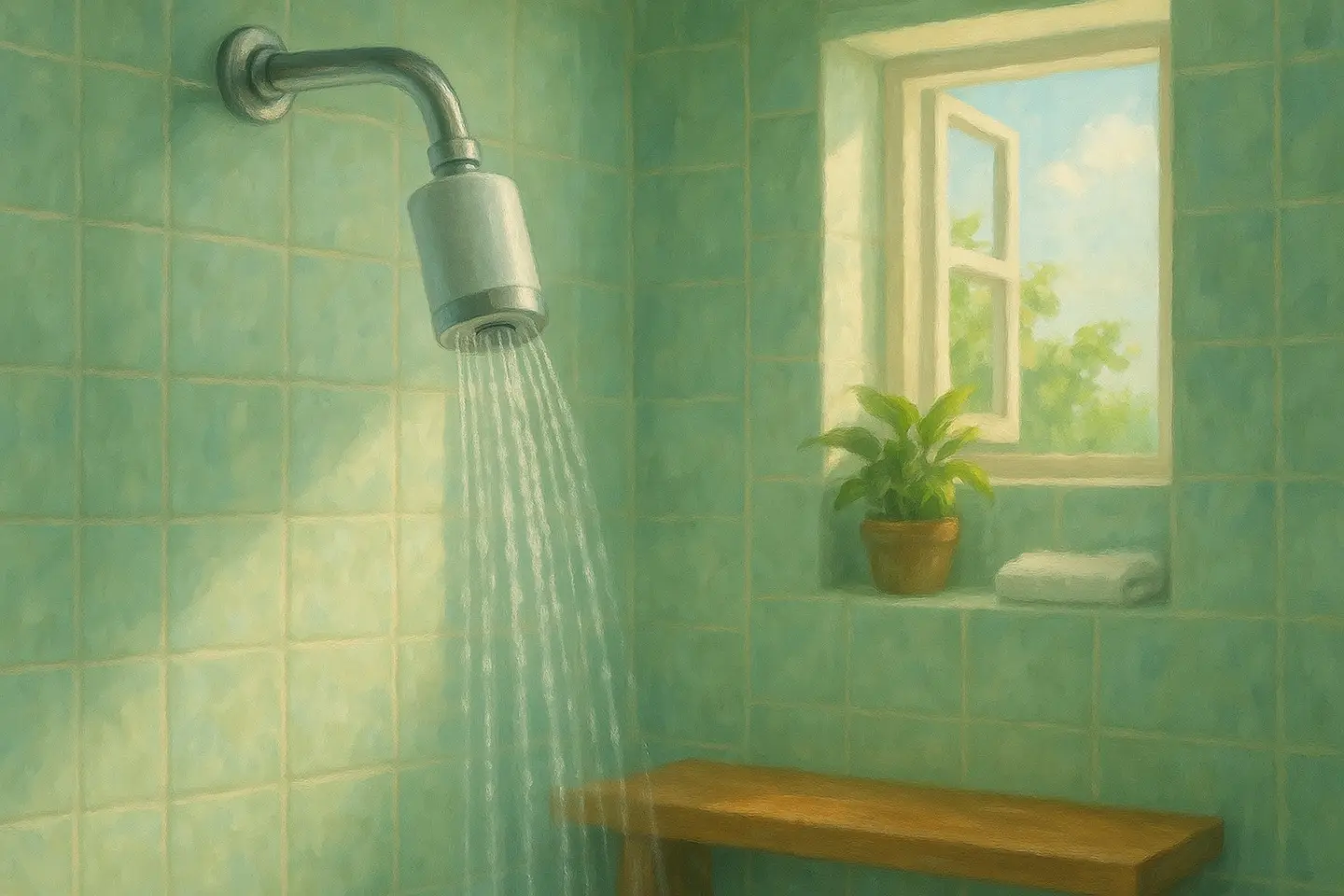
Our co-founder, Jay Devram, was interviewed by HigherDose about the importance of ensuring your shower water is contaminant-free. Here are some of the key points from that conversation.
(Read the full interview here.)
Why is filtering your shower water so important, and how is exposure different from drinking water?
Most of us think about filtering the water we drink, but far fewer consider the water we shower in every single day.
The key difference is how contaminants enter your body. With drinking water, ingestion is the primary route. With shower water, the main concerns are inhalation and dermal absorption. Hot water vaporizes certain contaminants, so you’re breathing them in. And because your skin is permeable to many of these compounds, they can be absorbed directly. In some cases, like highly volatile organic compounds, you may actually consume more of them from showering than from the water you drink.
What are some of the concerning contaminants found in shower water, and where do they come from?
Some of the more concerning contaminants we find in shower water are chlorine-based disinfectants and disinfection byproducts.
Chlorine-based disinfectants are added during water treatment to kill bacteria and pathogens, which is important. But they don’t fully get removed before reaching your tap. During hot showers, chlorine can enter the body through inhalation of vaporized chlorine gas and absorption through the skin.
The effects people notice first are usually on their skin and hair. Chlorine strips natural protective oils, leading to dryness, irritation, and gradual damage. People with eczema, psoriasis, or sensitive skin often see symptoms worsen.
When chlorine-based disinfectants react with organic matter, they form compounds called disinfection byproducts, which are volatile organic compounds. These include trihalomethanes, which are particularly concerning. Certain disinfection byproducts have been linked to elevated cancer risk and damage to the liver, kidneys, and central nervous system.
In the homes we’ve tested across the U.S., unfiltered shower water contained total trihalomethanes, a set of common disinfection byproducts, at an average of 93 times higher than commonly used health guidance levels.
Who benefits most from filtering their shower water, and how can someone tell if they need it?
Based on what we’ve seen, most people would benefit. Most homes have tap water with contaminants that can pose issues in the shower. That said, it’s especially relevant for young children, pregnant women, anyone with skin sensitivities, and people navigating chronic health issues.
If you want to know what’s in your water, the EWG (Environmental Working Group) has a free database at ewg.org/tapwater where you can search your zip code and see what’s been detected in your local supply.
What can you do about it?
The best way to deal with this is to install a good whole-house filter. It’s impossible to recommend a perfect whole-house filter for everyone, because the contaminants in each person’s water are different. Installing one of these will likely reduce contaminant load significantly when you’re using water from the tap, shower, laundry machine, and everything else.
Alternatively, install a shower filter. If you’re not quite ready to bite the bullet on a whole-house filter, you can install a shower filter instead. It’s simple to install, but provides only partial protection since it treats shower water while leaving bathroom sinks and other taps unfiltered. That said, the majority of THM exposure occurs during showering, so it still makes a meaningful difference. If you want to reduce exposure further, you can also wash your face using the shower filter even when you’re not showering.
Testing your water is important. Firstly, so you can identify the specific contaminants present so you can choose the right filtration system. Secondly, even if you already have a system installed, testing verifies that it was installed correctly and is actually meeting the manufacturer’s claims for contaminant removal, which, unfortunately, isn’t always the case.
Maintain your filtration system. Replace filters regularly according to the manufacturer’s schedule. If filters aren’t replaced on time, their performance drops sharply and in some cases the media can even release captured contaminants back into the water.